
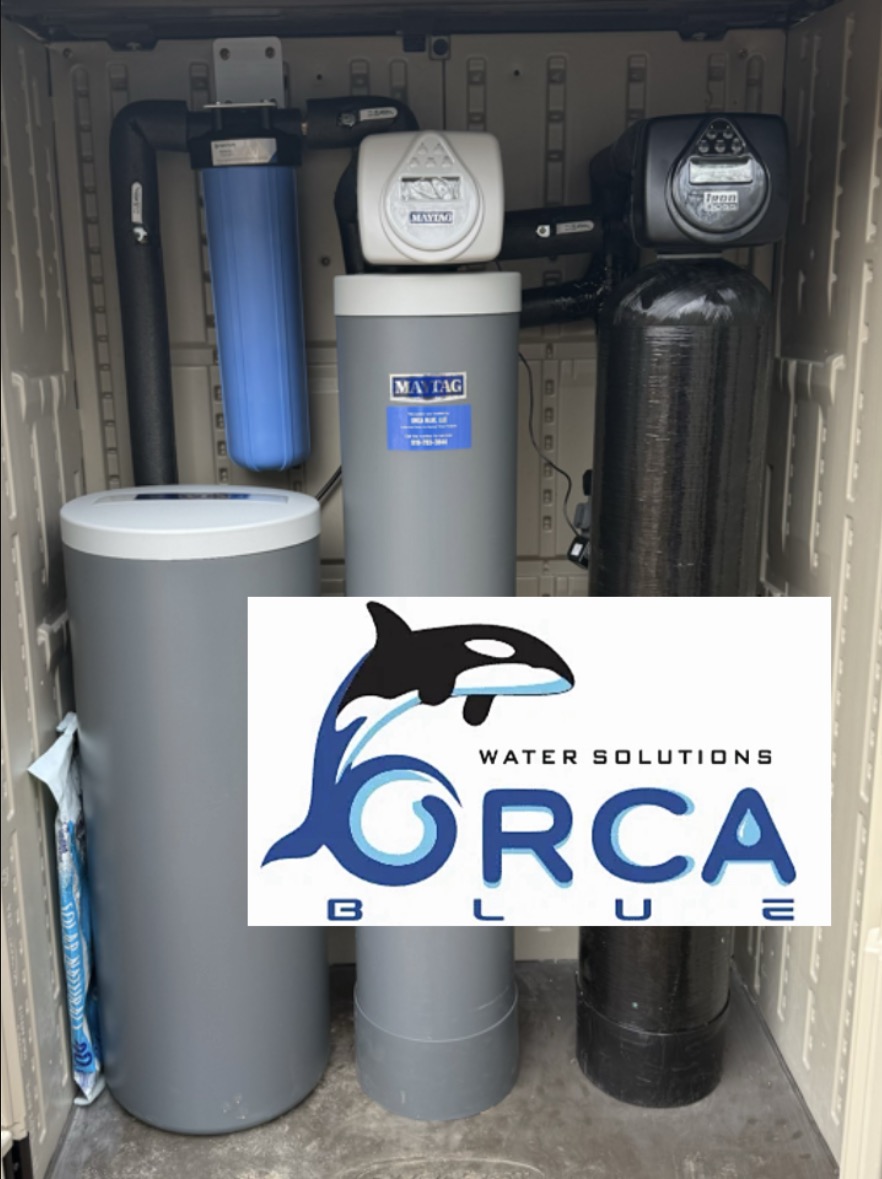
Quick Summary:
Hard water is caused by dissolved calcium and magnesium, and there is no reliable natural, whole-home remedy that removes those minerals from every tap. For Wilmington homeowners, the practical long-term solution is usually a properly sized water softener, often paired with whole-home filtration
and reverse osmosis for drinking water. The right setup starts with testing the water not guessing based on spots on a shower door.
White crust around faucets, cloudy glasses, dry-feeling skin, stiff laundry, and scale on appliances can all point to hard water. But the best answer is not a one-size-fits-all product. Orca Blue Water helps homeowners in Wilmington, Leland, and Hampstead
understand what is actually in their water first, then recommends treatment based on the home, water source, hardness level, and installation location.
What Is Hard Water?
Hard water contains elevated levels of dissolved minerals primarily calcium and magnesium. Those minerals are not usually considered a drinking-water health concern, but they can create expensive and frustrating household problems over time. As water dries or heats, the minerals can form scale inside plumbing, on fixtures, and on appliances such as water heaters, dishwashers, and washing machines.
Hardness can also make soap and detergent work less effectively. That is why some homeowners notice residue on dishes, soap scum in showers, laundry that feels less soft, or hair and skin that feel difficult to rinse clean. The U.S. Environmental Protection Agency explains that hard water can contribute to scale buildup and reduced appliance efficiency. Learn more from the EPA about water softening.
Can You Remove Hard Water Naturally?
Not in a dependable, whole-home way. A few common “natural” ideas can help with cleanup, but they do not remove the hardness minerals from your incoming water supply.
- Vinegar or citric acid: These can help dissolve existing mineral deposits on showerheads, faucets, glass, and coffee makers. They are cleaning tools not a solution for the water coming into the house.
- Boiling water: This is not a practical answer for household hard water. It does not provide consistent treatment for every fixture, appliance, shower, or load of laundry.
- Pitcher filters: A pitcher may improve taste for a small amount of drinking water, but it is not designed to protect a home’s plumbing or remove hardness throughout the house.
- Salt-free conditioners: Depending on the product and water conditions, these may help reduce scale behavior. They generally do not remove calcium and magnesium the way a true water softener does.
If the goal is to stop hard-water minerals before they reach showers, appliances, and plumbing, treatment needs to happen at the point where water enters the home.
How a Water Softener Actually Works
A traditional water softener uses ion exchange to replace hardness minerals with sodium or potassium ions. In simple terms, it removes the calcium and magnesium responsible for scale and helps deliver softer water throughout the home. That means fewer mineral deposits, better soap performance, and added protection for water-using appliances.
System sizing matters. An undersized system may regenerate too often or struggle to keep up with a household’s water use, while an oversized system can be inefficient. Orca Blue Water recommends testing first so the water softener can be matched to the home’s measured hardness, household needs, and available installation space. Efficient demand-initiated systems regenerate based on actual water use rather than an arbitrary schedule. The EPA also recommends choosing the right size and efficient regeneration features.
Why Wilmington Water Needs a Customized Approach
Wilmington-area homes do not all have the same water concerns. Some homes are served by public water, while others rely on private wells. A water softener addresses hardness, but it is not automatically the complete answer for every water-quality concern.
For city-water homes, Cape Fear Public Utility Authority draws from both the Cape Fear River and groundwater sources and treats water before distribution. The utility reports that its water meets applicable federal and state safeguards. At the same time, the lower Cape Fear River has a well-documented PFAS history, which is different from a hard-water issue. CFPUA uses advanced treatment and ongoing monitoring for PFAS, so it is important to distinguish source-water concerns from the quality of treated tap water. Read CFPUA’s drinking-water information.
For private-well homes, testing is even more important. Well water can vary widely from property to property, and naturally occurring minerals may create hardness, iron staining, sulfur odors, acidity, or other concerns. North Carolina advises private-well owners that testing can be performed at any time, not only when a well is newly installed. Review North Carolina private-well guidance.
Where Whole-Home Filtration Fits In
Whole-home filtration and water softeners do different jobs, and many Wilmington homes benefit from both. A whole-home filtration system can be designed to address concerns such as sediment, chlorine, odors, iron, or other water conditions identified during testing. A water softener then addresses the minerals that cause hardness and scale.
For well water, Orca Blue Water treats the water at the source with a customized whole-home approach and provides annual system service. For city water, filtration can improve the water experience throughout the home while a softener helps protect fixtures and appliances from hard-water scale. The right order and equipment depend on the test results not a generic checklist.
Why Reverse Osmosis Is a Separate Solution
Reverse osmosis is best thought of as a drinking-water and cooking-water solution, not a replacement for whole-home softening. Installed at the kitchen sink, a reverse osmosis system can reduce many dissolved contaminants, sediment, and man-made chemicals from the water used for drinking and food preparation. It can be an excellent complement to a whole-home filtration system and water softener.
Orca Blue Water can help Wilmington homeowners combine the systems where it makes sense: whole-home filtration for the entire house, a water softener for hardness protection, and reverse osmosis for high-quality drinking and cooking water. The goal is not to sell every system to every home it is to solve the problems the water test reveals.
FAQ
Is hard water unsafe to drink?
Hard water is generally not considered a health concern. The bigger issue for many homeowners is scale buildup, appliance efficiency, soap performance, and the day-to-day effect on fixtures, dishes, laundry, skin, and hair.
Will a whole-home filter remove hard water?
Not necessarily. Many filters target sediment, chlorine, odors, or specific contaminants, while a water softener is designed specifically to remove the calcium and magnesium that create hardness. Some homes need both.
Can I tell if I need a water softener by looking at spots?
Spots and scale are useful clues, but they are not a complete diagnosis. A water quality test identifies the actual hardness level and can reveal other conditions that affect which system is appropriate.
Should Wilmington homeowners worry about PFAS and hard water in the same way?
No. They are separate issues. Hard water is primarily a mineral problem; PFAS are a group of man-made chemicals. A customized treatment recommendation should address the specific concern identified in the water test and the home’s water source.
What is the first step?
Start with a free in-home water quality test from Orca Blue Water. Once you know the hardness level and other relevant water conditions, you can make a confident decision about whole-home filtration, a water softener, reverse osmosis, or a combination that fits your Wilmington home.