
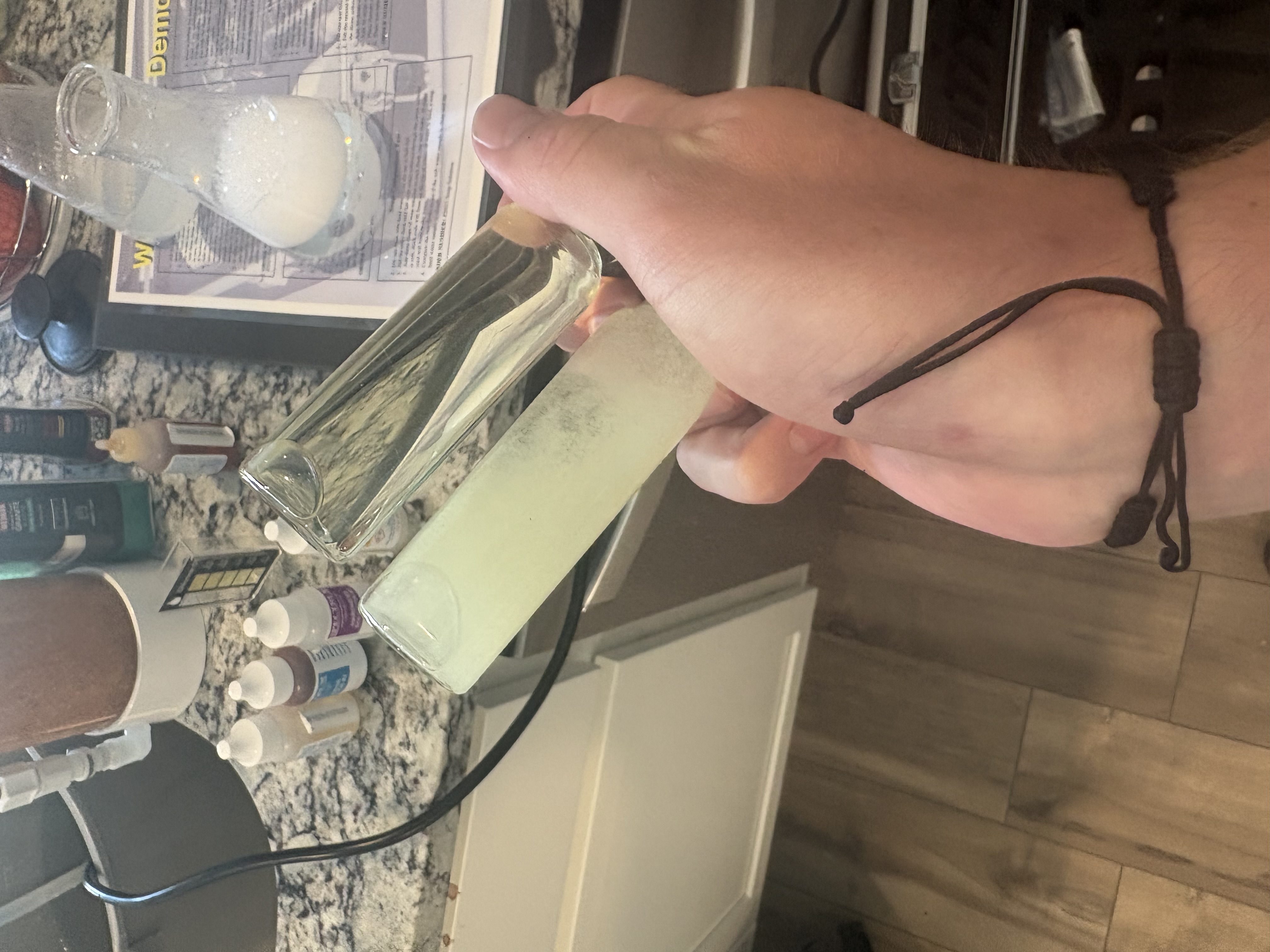
Wake Forest, NC tap water
is generally well regulated and monitored. Most Town of Wake Forest customers receive treated water through Raleigh Water, with Falls Lake serving as the primary source. Recent municipal reporting shows the system meeting applicable drinking-water standards, while many homes outside the municipal service area rely on private or community wells that can have very different water-quality needs including elevated hardness.
For homeowners, the practical question is not simply whether water is “safe.” It is also whether the water in your specific home is affecting taste, appliances, plumbing, laundry, skin, or peace of mind. That is why Orca Blue Water recommends starting with a clear, in-home water quality test.
Where Does Wake Forest’s Municipal Tap Water Come From?
Wake Forest’s public water service is part of the regional Raleigh Water system. The majority of this water comes from Falls Lake in northern Wake County and is treated at Raleigh’s E.M. Johnson Water Treatment Plant before traveling through the distribution system to Wake Forest and surrounding communities.
Source water is only the beginning of the process. Before it reaches a kitchen faucet, water is treated through a multi-step approach that includes processes such as coagulation, filtration, and disinfection. Raleigh Water also conducts ongoing monitoring and publishes annual and monthly water-quality reports for the regional system that serves Wake Forest.
Is Wake Forest Tap Water Meeting Drinking-Water Standards?
Based on the latest available Raleigh Water reporting, the municipal system is meeting applicable health-based drinking-water standards. The 2025 Consumer Confidence Report listed no violations for the regulated contaminants reported, including disinfectant levels, fluoride, disinfection byproducts, turbidity, lead, and copper.
Recent monthly finished-water data also reported no total coliform bacteria or E. coli at the treatment plant sampling point. The October 2026 report showed nitrate far below its federal maximum contaminant level, as well as total trihalomethanes below the applicable limit. These measurements are helpful snapshots of how the water is performing before it moves through the larger distribution system.
Publicly available compliance records also indicate no health-based EPA maximum contaminant level violations for the Raleigh system since 2010. That is an important indicator of regulatory compliance but it does not mean every home will experience water the same way. Household plumbing, fixtures, water heaters, and the exact source serving a property can all influence what homeowners notice at the tap.
What About PFAS, Lead, and Other Emerging Concerns?
PFAS, often called “forever chemicals,” are a frequent concern for Triangle-area homeowners. Raleigh Water has monitored PFAS for years and states that it is currently meeting federal drinking-water requirements for PFOA and PFOS. The utility also reports a PFAS hazard index well below the federal benchmark and continues to optimize treatment and monitor both source water and finished drinking water.
For lead, Raleigh Water’s 2025 report showed a non-detect result at the 90th percentile of sampled homes, with no sampled sites above the federal action level. Still, lead exposure is often tied to plumbing within or immediately serving a home, especially in older properties. If you have concerns about plumbing materials or a particular fixture, testing water directly at the tap is the most useful next step.
It is also worth remembering that compliance reports are designed to assess regulated public-water systems. They are not a substitute for understanding the water conditions in an individual house. Orca Blue Water helps Wake Forest homeowners make sense of both the official reports and the water actually coming from their faucets.
Is Wake Forest Water Hard or Soft?
Municipal water in the Raleigh Water system is generally considered relatively soft. Recent reported hardness values have been well below the level typically classified as hard water. That means many city-water customers may not need a traditional water softener solely because of municipal supply hardness.
However, water characteristics can change by season, neighborhood, and household plumbing conditions. Some homeowners notice spotting on glassware, scale around fixtures, dry-feeling skin, or appliance buildup and assume all of Wake Forest has the same hard-water profile. That is not always the case. A targeted water quality test can separate true hardness from issues involving chlorine taste, sediment, iron, pH, or aging plumbing.
Private Wells and Community Wells Are a Different Story
Many Wake Forest-area homeowners are not on Raleigh Water. They may rely on a private well or a smaller community well system, and those sources should be evaluated independently. Unlike municipal water, private-well water quality can vary significantly from one neighborhood or even one property to the next.
Hard water is a common issue in well water across parts of North Carolina. Higher calcium and magnesium can leave scale on fixtures, reduce water-heater efficiency, shorten appliance life, make soaps less effective, and create stubborn spots on dishes and shower doors. Wells can also have concerns such as iron, manganese, sulfur odors, low pH, sediment, bacteria, or nitrates depending on local geology, well construction, and nearby conditions.
For well-water homeowners, a one-size-fits-all system is rarely the right approach. Orca Blue Water uses a free water test to identify the actual issues first, then recommends an appropriately sized solution whether that means a whole-home filtration system, water softener, reverse osmosis drinking-water system, or a customized combination.
When Should You Test Your Water?
Homeowners should consider testing when moving into a home, purchasing a property with a private well, noticing a change in taste, odor, color, pressure, scale, or staining, or installing a new treatment system. Well owners should also test routinely, particularly for bacteria and other conditions relevant to their property.
Municipal-water customers may also benefit from an in-home test when they want more information about chlorine taste, hardness, plumbing-related concerns, or the performance of an existing filter. A test is not about creating alarm; it is about giving homeowners clear information so they can make informed decisions.
FAQ
Is Wake Forest, NC tap water safe to drink?
For customers served by Raleigh Water, current public reports show the system meeting applicable drinking-water standards. Individual home plumbing and localized concerns can still affect water at the tap.
Does Wake Forest have hard water?
Municipal Raleigh Water is generally relatively soft. Private and community well water can be much harder, so a property-specific test is the best way to know.
Does Wake Forest water contain PFAS?
Raleigh Water reports ongoing PFAS monitoring and states that it is meeting current federal requirements for PFOA and PFOS. Homeowners who want additional reduction at the drinking tap may consider appropriately certified filtration.
Do private wells need water treatment?
Not every well needs the same treatment, but wells should be tested regularly. Results may indicate a need for softening, filtration, disinfection, reverse osmosis, or no additional treatment at all.
How can I find out what is in my home’s water?
Schedule a free water quality test with Orca Blue Water. Our local team can help Wake Forest and Triangle-area homeowners understand their results and choose a practical solution for better-tasting, better-performing water.