
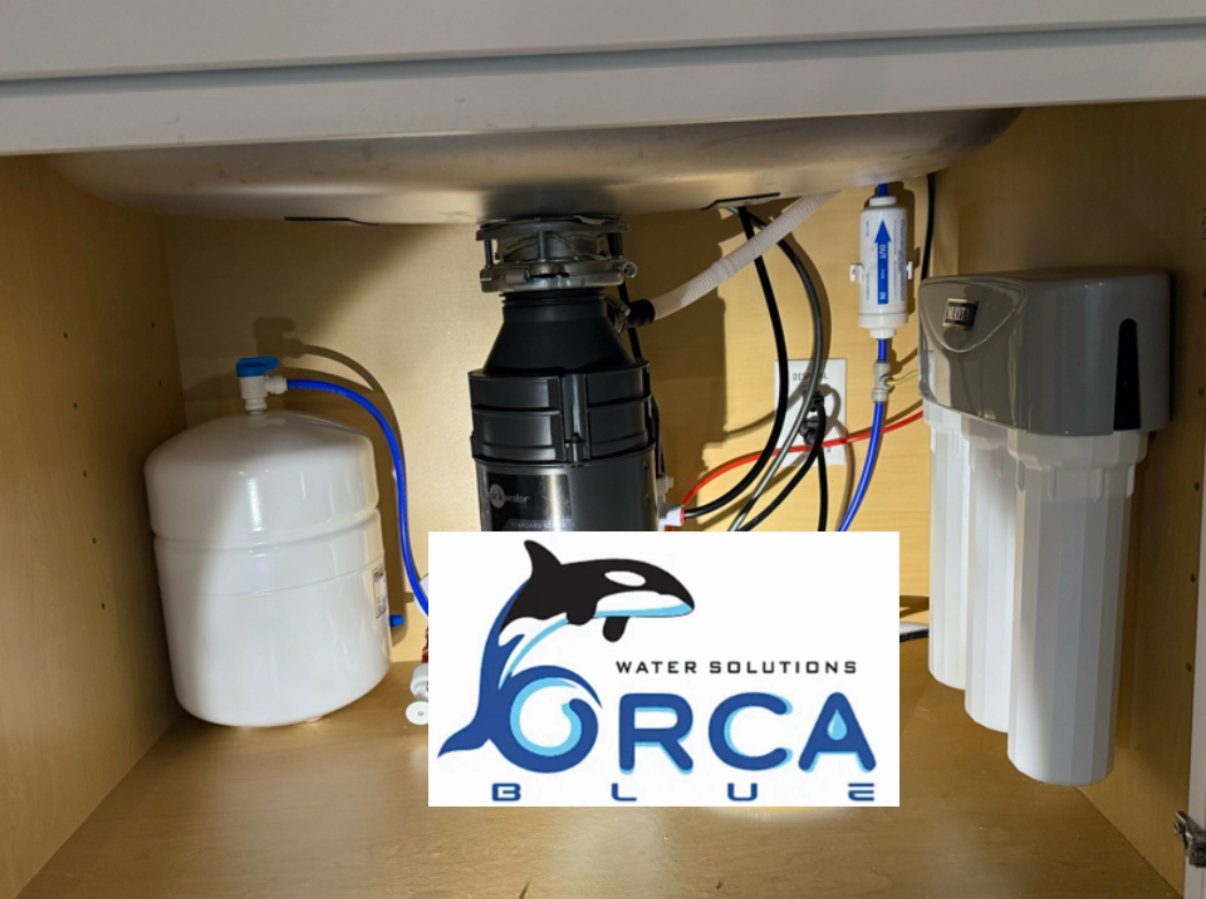
Most homeowners in the Raleigh–Durham
area can expect an installed under-sink reverse osmosis system
to cost depending on where the system can be installed, the condition of the incoming water, and the features you want. A water test and an in-home look at the plumbing are the best way to get an accurate recommendation instead of a one-size-fits-all quote.
At Orca Blue Water, we start with a free water quality test
because reverse osmosis works best as part of a solution designed around the home not just as a box installed under the sink.
The Typical Cost of an Under-Sink RO System
For most homes, reverse osmosis is a point-of-use system installed beneath the kitchen sink. It treats water for a dedicated drinking-water faucet and can often be connected to a refrigerator or ice maker as well.
Installation Location Can Change the Price
One of the biggest cost factors is the space beneath the sink and the condition of the existing plumbing. A straightforward installation with available cabinet space, a nearby cold-water line, and an accessible drain is typically more affordable than a project that needs extra modifications.
Costs can increase when an installer needs to add a dedicated faucet hole, work around a garbage disposal or crowded cabinet, run a line to a refrigerator, replace older shutoff valves, or make changes to accommodate a tankless system. Homes with stone countertops may also need additional planning if there is no existing opening for the RO faucet.
This is why an installation should be evaluated in person. The goal is a clean, dependable setup that is easy to service not a rushed installation that takes up every inch of usable cabinet space.
Hard Water Can Affect Your RO Investment
Hard water does not automatically mean you cannot install reverse osmosis. It does mean the system should be designed with the home’s water chemistry in mind. Hardness minerals such as calcium and magnesium can contribute to scale buildup, which may shorten filter or membrane life if the water is not treated appropriately before it reaches the RO unit.
For homeowners with significant hard water, a water softener or another pretreatment solution may be recommended before the reverse osmosis system. That can increase the upfront project cost, but it can also help protect the RO membrane, improve performance, and make maintenance more predictable.
In North Carolina, water conditions can vary from one neighborhood to the next especially when comparing city water filtration needs with well water systems. A free water test helps identify whether hardness, chlorine, sediment, iron, sulfur, or other issues should be addressed first.
Customization Options That Influence Price
Not every reverse osmosis system is built the same. The best system is the one that fits how a household uses water and what the water test shows. Common options that may affect cost include:
- Tank vs. tankless design: Traditional systems store purified water in a small tank, while tankless options can save cabinet space and provide water on demand.
- Remineralization: RO removes dissolved material very effectively. A post-filter can add minerals back for a preferred taste. Some homeowners choose a coconut-shell carbon or remineralizing stage as part of that finishing process.
- Refrigerator connection: Running purified water to an ice maker or refrigerator dispenser adds convenience and may require extra tubing and labor.
- Water-efficiency features: Higher-efficiency systems can reduce wastewater compared with older RO designs.
- Filter monitoring and service plans: Convenience features and scheduled maintenance can make ownership easier for busy homeowners.
Don’t Forget Ongoing Filter Costs
The purchase price is only part of the cost of owning a reverse osmosis system. Pre-filters and post-filters commonly need replacement every six to 12 months, while the RO membrane typically lasts longer depending on water quality, household use, and pretreatment.
Rather than choosing a system based only on the lowest upfront price, ask what replacement filters cost, how often they are expected to be changed, and whether service is available locally. A properly maintained system is essential for dependable water quality and good-tasting drinking water over time.
Why a Water Test Should Come Before a Quote
A reverse osmosis system is excellent for purified drinking and cooking water, but it is not always the first or only answer to a home’s water concerns. If the main issue is hard water throughout the house, homeowners may benefit most from a water softener. If chlorine taste, odor, sediment, or well-water concerns affect every fixture, whole home filtration may be the better foundation.
Orca Blue Water helps homeowners in Wake Forest, Raleigh, Durham, and throughout the Triangle area
understand what is actually in their water before choosing equipment. That approach helps avoid paying for features that do not solve the problem or overlooking a pretreatment need that could affect a new RO system.
FAQ
How much should I budget for reverse osmosis installation?
Your final cost depends on the system selected, plumbing access, water conditions, and optional connections such as a refrigerator line.
Does hard water make reverse osmosis more expensive?
It can. High hardness may call for pretreatment, such as a water softener, to help protect the RO membrane and support reliable performance. A water quality test identifies whether that added protection is recommended.
Is whole-home reverse osmosis worth the cost?
Whole-home RO can be appropriate for select water challenges, particularly certain well-water situations, but it is more complex and costly. For many homes, whole home filtration paired with an under-sink RO system provides an effective, more practical setup.
Can reverse osmosis water have minerals added back?
Yes. A remineralization or finishing filter can be added after the RO process to adjust taste and add minerals back to the drinking water.
How do I know which RO system is right for my home?
Start with a water quality test and an installation assessment. Orca Blue Water can evaluate your water, your available installation space, and your household’s needs to recommend a reverse osmosis solution that makes sense for your home and budget.