
Wilmington’s biggest water-quality concern
remains PFAS often called “forever chemicals”in the Cape Fear River watershed and in some private wells. At the same time, it is important to separate the documented contamination of the river source from the quality of treated public water: Cape Fear Public Utility Authority (CFPUA) says its current treatment systems remove PFAS to levels at or near non-detection. For homeowners, the practical question is not whether to panic; it is understanding their water source, reviewing current utility data, and testing private well water when appropriate.
For Wilmington-area homeowners, water quality is not a one-size-fits-all conversation. Orca Blue Water starts with a free in-home water quality test
so families can understand the water entering their
home and make an informed decision about drinking water, appliances, and whole-home protection.
1. PFAS and GenX Remain the Central Wilmington Water Issue
PFAS are a large family of man-made chemicals used in products designed to resist heat, water, grease, and stains. They are often called forever chemicals because many do not break down easily in the environment. In the lower Cape Fear region, PFAS including GenX have been tied to historic upstream discharges associated with the Chemours Fayetteville
Works facility.
That history matters because the Cape Fear River is a major drinking-water source for the Wilmington area. It also explains why PFAS continue to be a public-health, regulatory, and infrastructure issue even after significant improvements in treatment and source-control efforts. In June 2026, the U.S. Environmental Protection Agency announced a proposed federal settlement requiring Chemours to pay penalties and undertake a multi-year program intended to reduce PFAS and other toxic-chemical releases from its North Carolina facility.
The key takeaway: the PFAS issue has not disappeared simply because public treatment has improved. It remains an active watershed-management, monitoring, and cleanup issue that residents should continue to follow.
2. Treated City Water and Raw River Water Are Not the Same Thing
One of the most important distinctions for homeowners is the difference between raw source water and finished tap water. CFPUA draws much of its raw water from the Cape Fear River, while also using groundwater sources. Before water reaches homes, it is treated at facilities that use multiple processes.
At the Sweeney Water Treatment Plant, CFPUA uses ozone, biological filtration, granular activated carbon, ultraviolet treatment, and disinfection. CFPUA states that its granular activated carbon filters, brought online in 2022, consistently remove PFAS to levels at or near non-detection. Its Richardson Water Treatment Plant uses reverse-osmosis membrane treatment for groundwater.
That is encouraging for residents on the municipal system, and it is a meaningful example of investment in city water filtration.
Still, homeowners should avoid blanket statements that Wilmington water is either “perfectly clean” or “untreated contamination.” The more accurate picture is that the Cape Fear watershed has documented PFAS contamination, while the public utility has added advanced treatment to reduce PFAS in finished drinking water.
3. Private Wells Can Require a Different Level of Attention
Private well owners do not receive the same centralized treatment and routine utility reporting as customers served by a public water system. Well conditions can vary from property to property based on location, depth, nearby environmental conditions, plumbing, and the well’s construction and maintenance.
That distinction is especially important in parts of New Hanover County and the broader lower Cape Fear region. In March 2026, North Carolina announced $17 million in funding to extend waterlines to more than 300 homes with contaminated wells in New Hanover County. The state reported that, in project areas, more than 75 percent of sampled wells exceeded health-based standards for certain PFAS compounds.
Not every private well has the same result, and homeowners should not assume a neighbor’s test answers the question for their property. A qualified laboratory PFAS test is the way to identify PFAS concerns. A broader water-quality test can also identify practical issues that affect a home, including hardness, sediment, iron, sulfur odors, pH, and other water characteristics.
4. Treatment Works Best When It Matches the Water Source
There is no single “best filter” for every Wilmington home. The right approach depends on whether the home is served by CFPUA or a private well, what the test results show, the home’s plumbing, and the family’s goals.
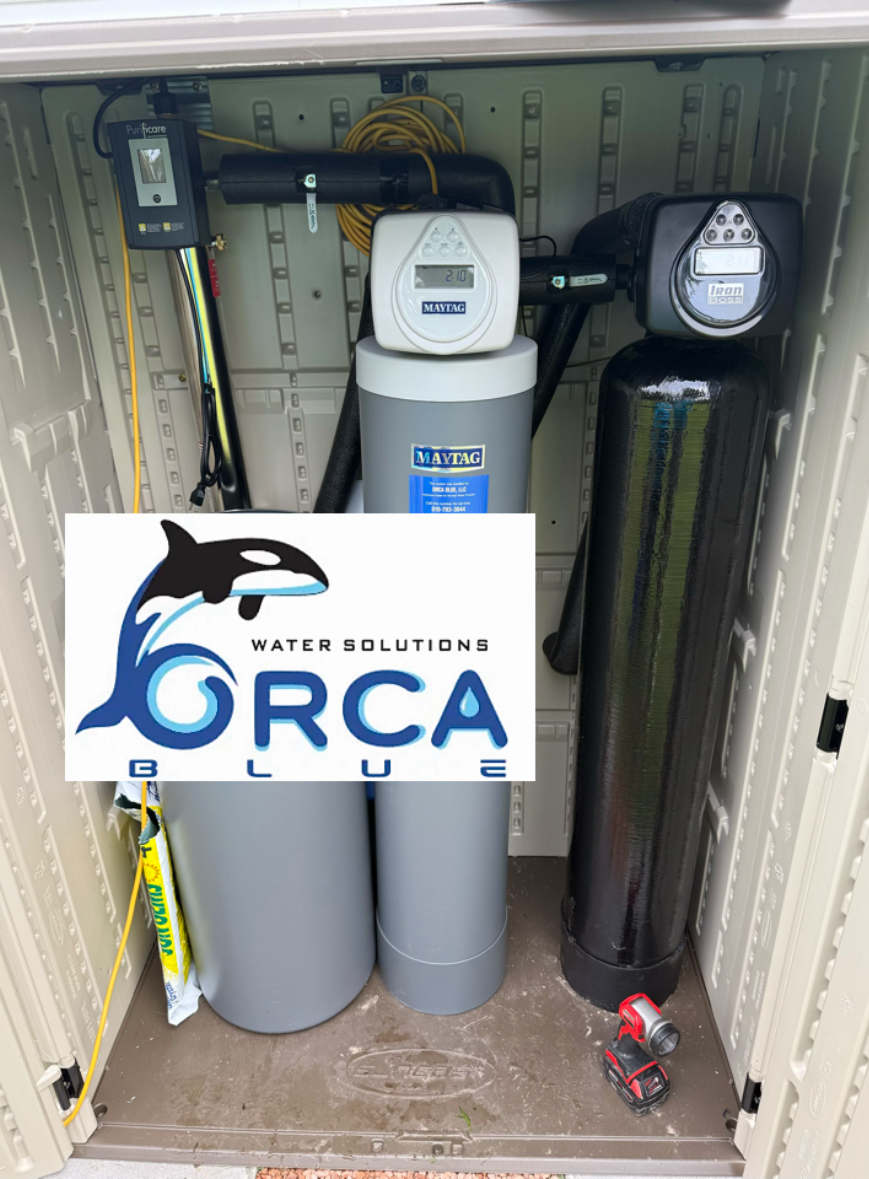
For point-of-use drinking and cooking water, reverse osmosis is widely used to reduce many dissolved contaminants. North Carolina DEQ notes that reverse-osmosis systems installed in its PFAS response work have shown effectiveness at removing PFAS when they are properly maintained. For broader household needs, whole-home filtration may address sediment, chlorine-related taste and odor, or other source-specific concerns. Water softeners serve a different purpose: they are designed primarily to address hard-water minerals that can contribute to spotting, scale buildup, and reduced appliance efficiency.
Orca Blue Water helps Wilmington, Leland, and Hampstead
homeowners sort through these differences with a free water test and a clear explanation of the results. The recommendation should be based on the water itself not a generic, one-size-fits-all sales pitch.
5. Maintenance and Monitoring Matter as Much as Installation
A treatment system is not a set-it-and-forget-it appliance. Filters and membranes have service intervals, and performance depends on proper installation, timely maintenance, and the quality of the incoming water. DEQ specifically notes that carbon systems need maintenance to remain effective and that reverse-osmosis components require periodic replacement.
For city-water customers, reviewing CFPUA’s annual water-quality report and regular PFAS test results is a smart habit. For private-well owners, routine testing is essential especially after changes in taste, odor, color, plumbing work, flooding, storm impacts, or a new family health concern.
For homeowners who want added confidence in their kitchen water, Orca Blue Water can evaluate the home’s water and explain whether a reverse-osmosis drinking-water system, whole-home filtration, a softener, or a combination makes sense. The goal is simple: give Wilmington families clear information and practical options.
What Wilmington Homeowners Can Do Now
- Confirm whether your home is served by CFPUA, another public system, or a private well.
- Review the most recent utility water-quality report and PFAS updates if you use public water.
- Have private well water tested by a qualified lab, including PFAS testing when relevant to your location.
- Do not confuse a water softener with a PFAS treatment system; each solves a different problem.
- Maintain any existing filters or reverse-osmosis system on schedule.
- Schedule a free in-home water quality test with local water experts if you want help interpreting everyday water conditions in your home.
FAQ
Is Wilmington tap water safe to drink?
CFPUA reports that its treated drinking water meets or exceeds applicable federal and state standards and that its advanced treatment removes PFAS to levels at or near non-detection. The source watershed still has documented PFAS contamination, so it is reasonable for residents to stay informed through current utility reporting.
What is GenX?
GenX is a PFAS compound associated with the Cape Fear River contamination issue. It is one of the chemicals that prompted major monitoring, treatment, legal, and cleanup efforts in the region.
Should I test my private well for PFAS?
If your home relies on a private well in the lower Cape Fear region, testing is the only reliable way to understand your property’s water. State programs may also provide guidance or eligibility information for affected residents.
Can reverse osmosis help with PFAS?
Reverse osmosis can be an effective point-of-use option for drinking and cooking water when the system is properly selected, installed, and maintained. It should be part of a recommendation based on actual water testing and household needs.
Do I need a water softener, filtration system, or both?
It depends on the water. A softener addresses hardness minerals, while filtration and reverse osmosis target other water-quality concerns. Orca Blue Water can help homeowners identify the right solution after testing their water.
For official updates, homeowners can review CFPUA’s drinking-water information, NCDEQ’s private-well PFAS guidance, and the EPA’s June 2026 Chemours settlement summary.