
If hard-water symptoms are returning around your home, your water softener may not be working as it should. In Wilmington, Hampstead, and Leland
NC, homeowners can often spot the issue by watching for scale buildup, testing their water hardness, and checking the system for salt, power, bypass, or regeneration problems. The good news: many softener issues can be corrected with service before they become a bigger headache.
A water softener
is designed to remove the hardness minerals primarily calcium and magnesium that can affect fixtures, appliances, laundry, and everyday water use. When the system stops regenerating properly or cannot create the brine it needs, hard water can make a comeback fast. Here are the signs to watch for and the practical checks you can make.
1. White Scale Is Returning on Fixtures and Appliances
One of the easiest signs of a water softener problem is the return of white, chalky buildup. You may notice it on faucets, showerheads, glass shower doors, coffee makers, dishwasher interiors, or around the base of fixtures.
Hard-water minerals leave behind deposits as water dries. If you were previously seeing cleaner fixtures and less spotting, then suddenly find yourself scrubbing scale again, your softener may not be treating the water effectively.
Pay attention to your water-using appliances, too. Mineral buildup can reduce efficiency and contribute to premature wear in water heaters, dishwashers, washing machines, and ice makers. Catching a softener issue early can help protect the equipment throughout your home.
2. Dishes, Laundry, Skin, and Hair Feel Different
Hard water often shows up in day-to-day routines before homeowners think to inspect their water treatment equipment. Common signs include cloudy glasses, water spots on dishes, soap that does not lather as well, stiff laundry, dry-feeling skin, and hair that feels dull or difficult to rinse.
These symptoms do not automatically mean the softener has failed, but they are worth investigating especially if they are new or noticeably worse. A quick water quality test
can confirm whether hardness has returned at a treated tap.
3. The Salt Level Is Not Going Down
Your softener needs salt to make brine during the regeneration process. If the salt level stays exactly the same for weeks or months, the unit may not be regenerating, it may not be drawing brine correctly, or a salt bridge may be blocking the salt from reaching the water below.
A salt bridge is a hardened crust of salt that forms inside the brine tank. The tank can look full from the top, but there may be an empty space underneath the crust. Because the salt is not dissolving into the water, the system cannot make the brine needed to recharge the resin that removes hardness.
Another issue can be salt mushing: a thick, sludgy layer of salt at the bottom of the tank. This can also interfere with proper brine production. Before poking around inside the system, check the owner’s manual or call a professional different systems have different components and service requirements.
4. There Is Too Much Water in the Brine Tank
Some water in the brine tank is normal. However, standing water that seems unusually high, does not decrease after a regeneration cycle, or is paired with hard-water symptoms may point to a problem.
Possible causes include a blocked drain line, a clogged injector, a brine-line issue, a stuck float, or a control-valve problem. These are not always visible from the outside, which is why a professional inspection can save time and prevent accidental damage to the unit.
5. The System Has No Power, an Error Code, or the Wrong Time
Modern water softeners rely on a control head to track water use and trigger regeneration. If the display is blank, showing an error code, or has the wrong time after a power interruption, the system may not regenerate when it needs to.
Start with the basics: make sure the unit is plugged in, verify the outlet or breaker is working, and check whether the display is on. If your model has a clock or programming screen, confirm that the time and settings are correct. Do not change programming at random hardness settings, household water use, and system capacity all affect how frequently the softener should regenerate.
6. The Bypass Valve Is Open
A water softener bypass allows water to flow around the system during maintenance or service. If the bypass valve is left open or only partially returned to its normal position your home can receive untreated hard water even though the softener itself is still operating.
If you recently had plumbing work done, moved into a home with an existing system, or changed filters nearby, it is worth checking that the softener is in its normal service position. If you are unsure which position is correct, avoid forcing handles or valves and have a water treatment professional take a look.
7. A Manual Regeneration Does Not Solve the Problem
Many systems allow a manual regeneration cycle. If your softener completes a regeneration and the water still tests hard afterward, that can indicate an issue beyond low salt. The resin media may be fouled, the unit may not be drawing brine, the valve may not be sealing correctly, or the system may no longer be properly sized or programmed for your household’s water conditions.
Water conditions can change over time, particularly for homes using well water or dealing with iron and other water-quality concerns. That is why testing matters. It helps identify whether the problem is the softener itself or a change in the incoming water that requires a different treatment approach.
How to Check Whether Your Water Softener Is Working
Start by looking for hard-water symptoms around the home, then test the water from a softened tap. A free in-home water quality test from Orca Blue LLC
can help confirm whether hardness is getting through the system and identify other factors that may be affecting performance.
Next, visually inspect the unit for an empty salt tank, salt bridging, excess water in the brine tank, a blank display, error messages, leaks, or an open bypass. Do not attempt repairs involving electrical components, control valves, or plumbing connections unless you are comfortable with the system and following its manufacturer instructions.
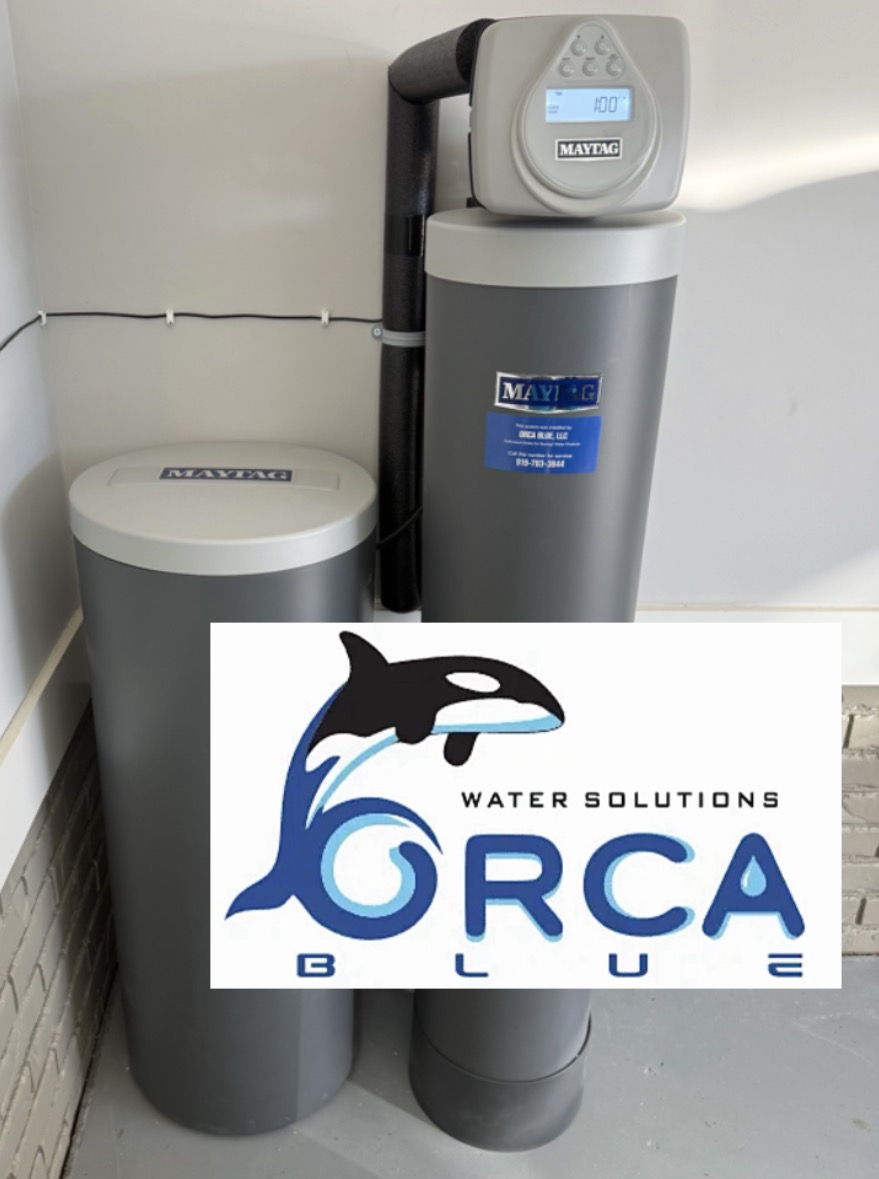
Orca Blue LLC leaves its service phone number on every system we install. If something feels off, give us a call. Our local team can inspect the unit, test your water, explain what is happening, and help get your water softener back on track for your Wilmington home.
FAQ
How long should a water softener last?
Many water softeners last roughly 5 to 10 years, depending on the system, water conditions, maintenance, and warranty coverage. Orca Blue Maytag water softeners include a forever lifetime warranty with replacement at no cost if something goes wrong, excluding the installation fee.
Can a water softener stop working even if it has salt?
Yes. Salt may be present but unable to dissolve because of a salt bridge or salt mushing. Other possible issues include a clogged injector, a drain restriction, an open bypass, or a regeneration/control problem.
Why is my water softener using too much salt?
Frequent regeneration, incorrect programming, a leaking valve, or changing water conditions can increase salt use. A service visit and water test can help identify the cause rather than guessing at settings.
Should I repair or replace my water softener?
It depends on the system’s age, condition, warranty, water hardness, placement, and the features you want. A water test and professional inspection are the best starting points for a recommendation tailored to your home.
Does Orca Blue LLC service water softeners in Wilmington, NC?
Yes. Orca Blue LLC helps Wilmington-area homeowners diagnose hard-water concerns, test water quality, and service or replace water treatment equipment when needed.