
Quick Summary:
Raleigh tap water
is treated and monitored to meet drinking-water standards, but reverse osmosis (RO) is the better choice for homeowners who want an additional layer of filtration for the water they drink and cook with every day.
A properly selected, maintained RO system can reduce many dissolved substances and specific contaminants while improving taste and giving your household more control over its water quality.
At Orca Blue Water, we believe the best water decision starts with clear information, not scare tactics.
Raleigh Water performs regular testing and publishes water-quality reports, yet the water that arrives at your faucet can still be affected by your home’s plumbing, your preferences, and the contaminants you personally want to reduce. That is why many Raleigh homeowners choose reverse osmosis for drinking water.
Is Raleigh Tap Water Safe to Drink?
Raleigh’s municipal water is treated and monitored under state and federal drinking-water requirements. The City publishes annual and monthly water-quality information, and its reports provide a helpful starting point for understanding what is being tested in the public system. Review Raleigh Water’s current reports.
“Safe” and “best for your household” are not always the same question. Municipal treatment is designed to serve an entire community. It does not necessarily address every homeowner’s preferences for taste, odor, dissolved solids, chlorine-related flavor, or extra reduction of contaminants at the point where water is consumed.
For that reason, choosing RO is not about claiming that every glass of tap water is unsafe. It is about choosing a more thorough treatment option for your family’s drinking water, coffee, tea, ice, soups, and everyday cooking.
Why Reverse Osmosis Is the Better Drinking-Water Choice
Reverse osmosis uses pressure to move water through a semi-permeable membrane. That membrane separates many dissolved substances from the treated water stream. The U.S. Environmental Protection Agency notes that point-of-use RO systems can potentially reduce contaminants such as lead, certain volatile organic compounds, PFAS, arsenic, bacteria, and viruses, depending on the system and its certified claims. Learn how EPA describes point-of-use RO systems.
For homeowners, the practical benefit is simple: RO provides a highly filtered source of water right at the kitchen sink. Instead of wondering about what may be affecting taste or what could be present in trace amounts, you have a dedicated system designed to reduce a broad range of dissolved contaminants.
RO is especially valuable because it is not limited to improving taste alone. It can reduce total dissolved solids and, with the correct certification, target particular substances of concern. NSF/ANSI 58 is the key standard for residential reverse osmosis systems; it includes performance testing for total dissolved-solids reduction and can include verified claims for contaminants such as lead, arsenic, nitrate/nitrite, fluoride, chromium, copper, and more. See the NSF/ANSI 58 standard overview.
What About PFAS in Raleigh Water?
PFAS are often called “forever chemicals” because they persist in the environment. Raleigh Water shares PFAS testing information and reports that its treatment team continues monitoring and evaluating treatment approaches for these compounds. View Raleigh’s PFAS data and information.
A home RO system should not be marketed as a magic solution for every water concern. But an RO system with a verified PFAS reduction claim can be a meaningful added safeguard for drinking and cooking water. EPA recommends looking for third-party certification and confirming that a filter is certified for the specific PFAS reduction claim you want. Read EPA’s guidance on certified PFAS-reducing filters.
Does Reverse Osmosis Remove Healthy Minerals?
RO can reduce dissolved minerals along with unwanted substances. For healthy people, properly filtered RO water is safe to drink daily. Hydration comes from drinking enough water, while most essential minerals in a balanced diet come from food not a single glass of water.
Homeowners who prefer a different taste profile can choose a system configuration that includes a remineralization stage, such as a coconut-shell carbon post-filter designed to enhance taste. The right configuration depends on your incoming water, installation location, and how you want your drinking water to taste and perform.
What Are the Real Tradeoffs?
The main consideration with RO is choosing and maintaining the right system. Filters and membranes need replacement on schedule, and RO systems create a separate reject-water stream during filtration. Modern, efficient systems can greatly improve that ratio; EPA encourages homeowners to consider WaterSense-labeled RO products, which meet efficiency and performance criteria. Explore EPA’s RO efficiency guidance.
That is why a water test matters. A system should be selected for the conditions in your home not based on a one-size-fits-all sales pitch. For Raleigh city water, an RO drinking-water system often pairs well with whole-home filtration
when a homeowner also wants to address water throughout the house. For well water, pretreatment may be necessary before RO to protect the membrane and ensure consistent performance.
Start With a Free Raleigh Water Quality Test
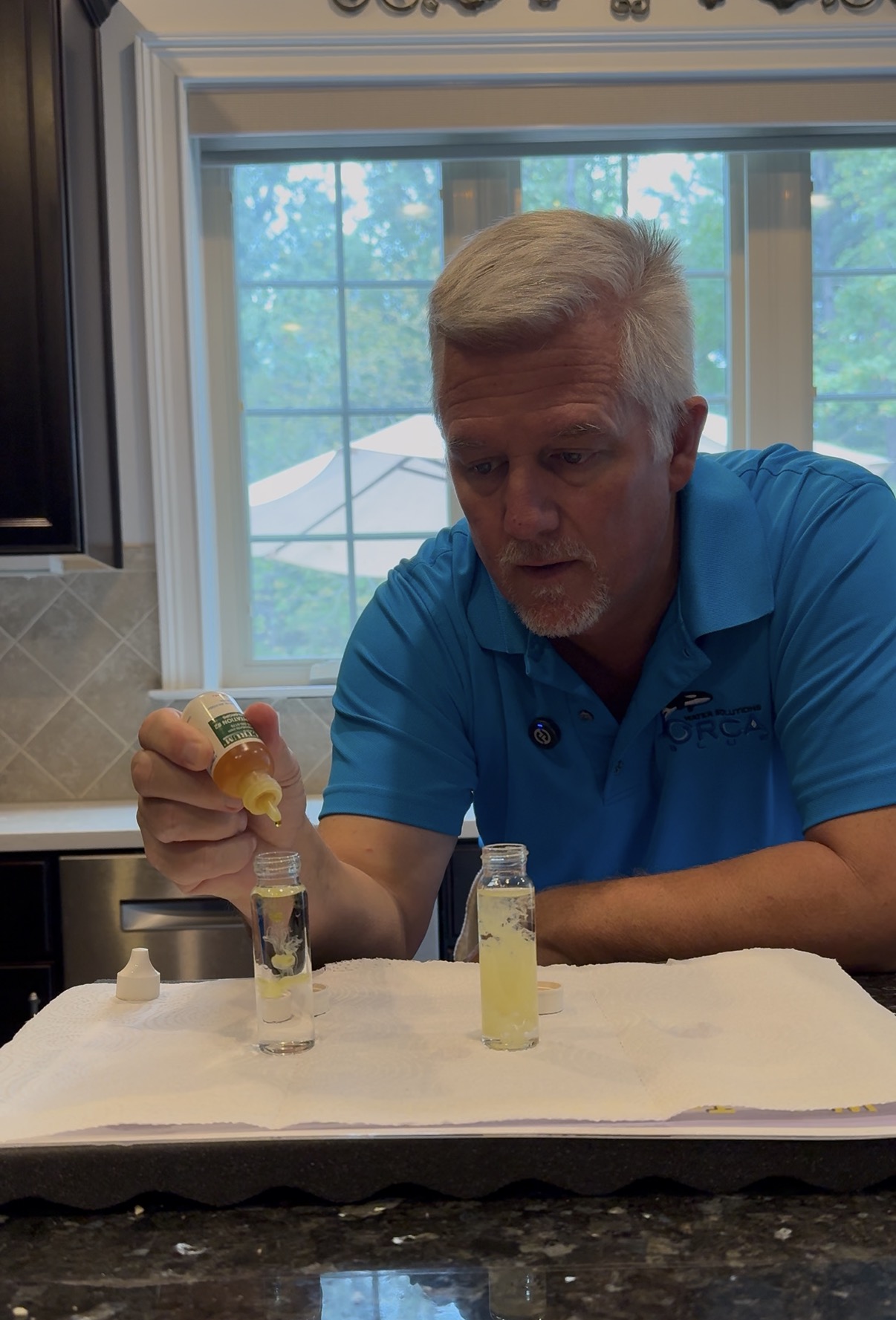
If you are deciding between tap water and reverse osmosis water, start by learning what is in your water at home. Orca Blue Water provides free in-home water quality tests for homeowners in Raleigh, Wake Forest, Durham, and across the Triangle area. We explain the results clearly, answer your questions, and recommend a solution based on your household not a national sales script.
Whether you want better-tasting water, more confidence in the water used for cooking, or a complete water treatment plan, reverse osmosis can be an excellent choice. For the water you drink most often, it delivers an added level of filtration that standard tap water alone does not provide.
FAQ
Is reverse osmosis water healthier than tap water?
RO water is not a substitute for a healthy diet, but it can offer a more thoroughly filtered option for drinking and cooking by reducing a broad range of dissolved substances and contaminants based on the system’s certified performance claims.
Does Raleigh tap water need reverse osmosis?
Raleigh tap water is treated and monitored, so RO is a homeowner choice rather than a blanket requirement. Many people choose it for enhanced contaminant reduction, taste, and greater control over the water at their kitchen sink.
Can an RO system reduce lead?
Some RO systems are certified to reduce lead under NSF/ANSI 58. Always review the model’s performance data sheet and certifications rather than assuming every system has the same reduction claims.
Will reverse osmosis help with PFAS?
RO can be an effective option for PFAS reduction when the specific system has a third-party certified PFAS reduction claim. Check the product documentation for the exact contaminants it is certified to reduce.
How do I know which system is right for my home?
A professional water quality test is the best first step. Orca Blue Water can evaluate your water source, existing water conditions, and household goals to recommend the appropriate drinking-water and whole-home treatment options.