
Quick Summary:
For most homes served by the Cape Fear Public Utility Authority (CFPUA) Wilmington
system, tap water is considered safe to drink because it is treated, monitored, and reported as meeting applicable federal and North Carolina drinking-water standards. That said, “safe” does not necessarily mean every home’s water will taste the same or have the same condition after it travels through household plumbing. Wilmington homeowners
who want more confidence in their water can benefit from understanding their source water, their home’s plumbing, and the filtration options that fit their goals.
Wilmington has had understandable questions about drinking water for years, especially because the Cape Fear River and PFAS contamination have received so much public attention. The good news is that the local utility has invested in treatment and ongoing testing. For city-water customers, the practical answer is yes: the water is treated for drinking and the most recent CFPUA report states that the Wilmington system met rigorous state and federal standards.
What the Latest Wilmington Water Report Says
CFPUA’s 2025 Drinking Water Quality Report says its Wilmington water system met all applicable standards during the reporting period. The utility continuously monitors for a wide range of potential contaminants, including microbial contaminants, lead and copper, radiological contaminants, and PFAS compounds such as GenX.
The report also shows low average levels for several monitored PFAS compounds in the finished water supply. That matters because these “forever chemicals” have been a major concern in southeastern North Carolina. CFPUA’s treatment process and monitoring program are designed to address that concern while providing water that meets regulatory requirements.
It is important to use the report for the system that serves your address. The Wilmington area includes more than one water system, and some properties may be served by a different utility or use a private well. If you are unsure, check your water bill or confirm your service area before comparing water-quality information.
Why Wilmington Water Gets So Much Attention
Wilmington’s drinking water conversation is not new. The Cape Fear River has been affected by upstream industrial discharges, including PFAS. Residents have every reason to ask questions, read the annual report, and want clear answers about what comes out of the faucet.
There is a key distinction, however, between the raw source water in the river and the treated water delivered to a home. CFPUA draws from river and groundwater sources, then treats and tests the water before it enters the distribution system. The utility’s annual report is the best starting point for understanding whether the public water system is meeting required standards.
At Orca Blue Water, we believe homeowners deserve straightforward information not fear-based messaging.
City water in Wilmington is treated and regulated, but a homeowner may still want filtration for added confidence, better taste, reduced chlorine odor, or a more customized drinking-water experience.
Safe Water and Better-Tasting Water Are Different Goals
Water can meet drinking-water standards and still leave room for improvement based on your household preferences. Some homeowners notice a chlorine taste or smell. Others are focused on hard-water minerals, spotting on fixtures, dry-feeling skin, scale in appliances, or simply having cleaner-tasting water at the kitchen sink.
A whole-home filtration system
can be a strong option for homeowners who want to address water throughout the house. Depending on the water conditions and the system design, it can help improve the water used for bathing, laundry, cooking, and cleaning. A water softener
may be appropriate when hardness is contributing to mineral buildup and appliance wear.
For drinking and cooking water, reverse osmosis
is highly recommended for homeowners who want an additional layer of point-of-use filtration. A properly selected reverse osmosis system can provide exceptionally clean-tasting water at a dedicated faucet. Some systems can also use a coconut-based post-filter to add minerals back for a more refreshing taste.
Your Home’s Plumbing Still Matters
Annual utility reports describe the water leaving the public system and sampled across the service area. They cannot predict every condition inside every home. Older plumbing, a private service line, infrequently used pipes, a water heater, or fixtures with buildup can affect what you notice at the tap.
If water has a metallic taste, unusual odor, discoloration, sediment, or inconsistent pressure, it is worth investigating instead of assuming it is normal. Those issues do not automatically mean the water is unsafe, but they can reveal a plumbing concern or a water-treatment need. A water quality test helps separate assumptions from facts.
This is especially important for homes on private wells. Private well owners are responsible for testing and treatment because their water does not receive the same ongoing treatment and compliance monitoring as CFPUA city water. A well water system should be designed around actual test results, not a one-size-fits-all recommendation.
How to Decide Whether You Need Filtration
Start with your goal. Are you mainly concerned about drinking water, whole-home water quality, hard-water scale, chlorine taste, or a private well? The answer guides the right solution.
- For improved drinking water: Consider a reverse osmosis system at the kitchen sink.
- For better water throughout the home: Explore whole-home filtration.
- For mineral scale and hard-water concerns: Ask whether a water softener makes sense.
- For a private well: Begin with comprehensive water testing before choosing equipment.
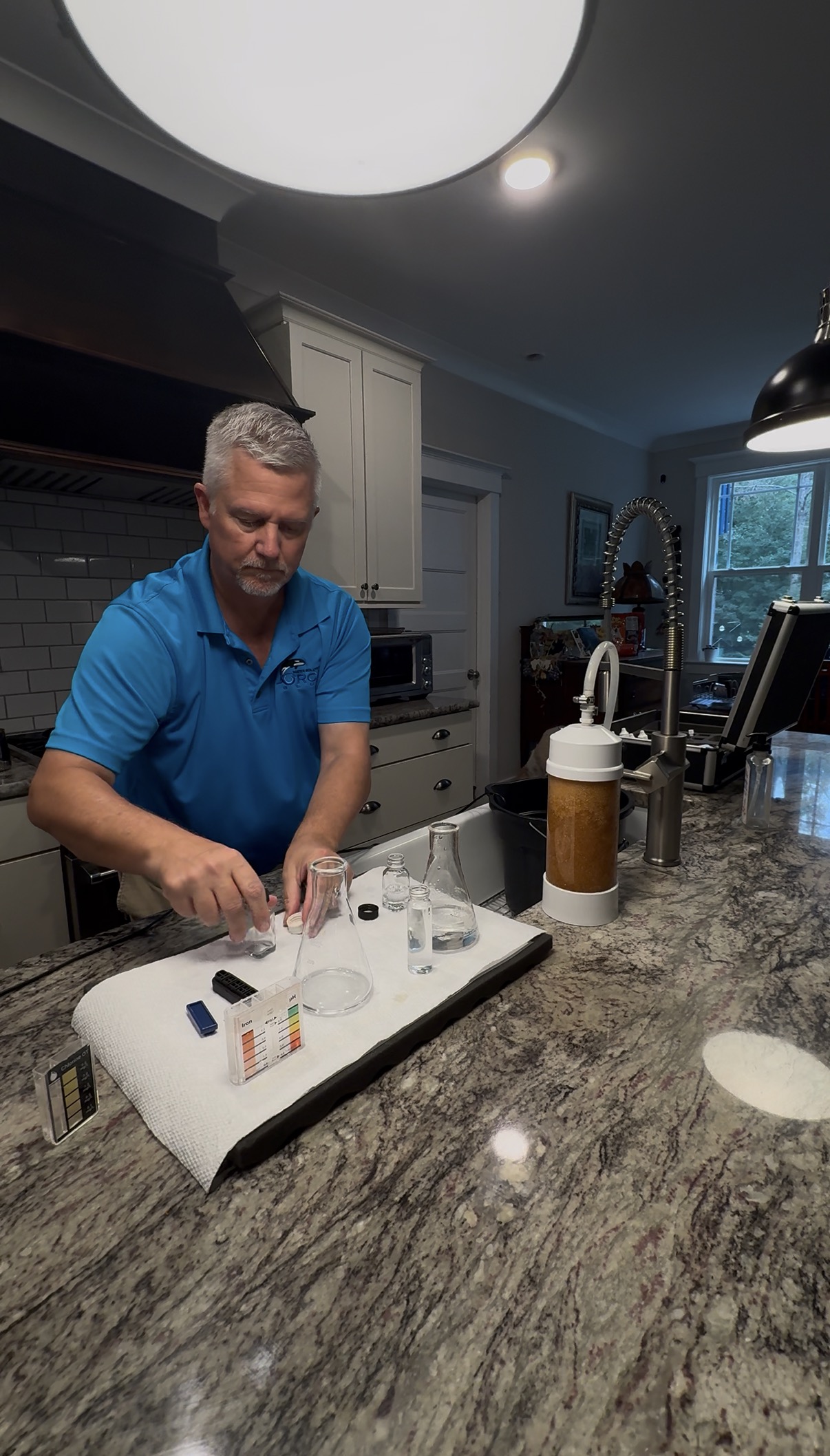
For Wilmington city-water homes, the right reverse osmosis recommendation depends on water hardness, the installation location, and how much customization you want in the system. Orca Blue Water begins with a free in-home water quality test so homeowners can see what is happening in their own water before deciding on treatment.
Get Answers for Your Specific Wilmington Home
So, is Wilmington tap water safe to drink? For customers on the CFPUA Wilmington public water system, the latest annual report supports a yes: the system meets applicable drinking-water standards. But your home, your plumbing, and your preferences still matter.
Orca Blue Water helps Wilmington-area homeowners make informed decisions about water softeners, whole-home filtration, and reverse osmosis. We focus on clear education, five-star service, and solutions built around the actual water in your home. If you want to know more than what a citywide report can tell you, schedule a free water test and get a clearer picture of your water quality.
FAQ
Is CFPUA water in Wilmington safe to drink?
Based on CFPUA’s 2025 Drinking Water Quality Report, the Wilmington public water system met applicable federal and state drinking-water standards. Individual homes can still have different plumbing conditions, so a home-specific test may be helpful if you have concerns.
Does Wilmington tap water contain PFAS?
CFPUA monitors for PFAS, including GenX and other compounds, and reports its results annually. The 2025 report lists monitored PFAS results for the Wilmington system and states that the system met applicable standards.
Do I need a water filter if I have city water?
Not everyone needs one for regulatory compliance, but filtration can be useful for taste, odor, personal preference, hard-water concerns, and added point-of-use treatment for drinking water. The best option depends on your water test and household goals.
Is reverse osmosis a good choice in Wilmington?
Reverse osmosis is a highly recommended option for cleaner-tasting drinking and cooking water. The best setup depends on hardness, installation location, and the level of customization you prefer.
What if my Wilmington-area home uses a private well?
Private wells should be tested regularly because the homeowner is responsible for water quality and treatment. A professionally designed well water system should follow the results of a comprehensive test.
For more information, review CFPUA’s 2025 Drinking Water Quality Report and its Drinking Water Quality resources.