
Quick Summary:
Reverse osmosis (RO)
water is a strong option for homeowners who want to reduce specific contaminants in their drinking and cooking water. It is not “dead water,” but it does remove minerals along with many unwanted dissolved substances. The real considerations are choosing a system that targets your water concerns, maintaining it correctly, accounting for wastewater, and deciding whether a properly designed remineralization stage is right for your household.
What Reverse Osmosis Does Well
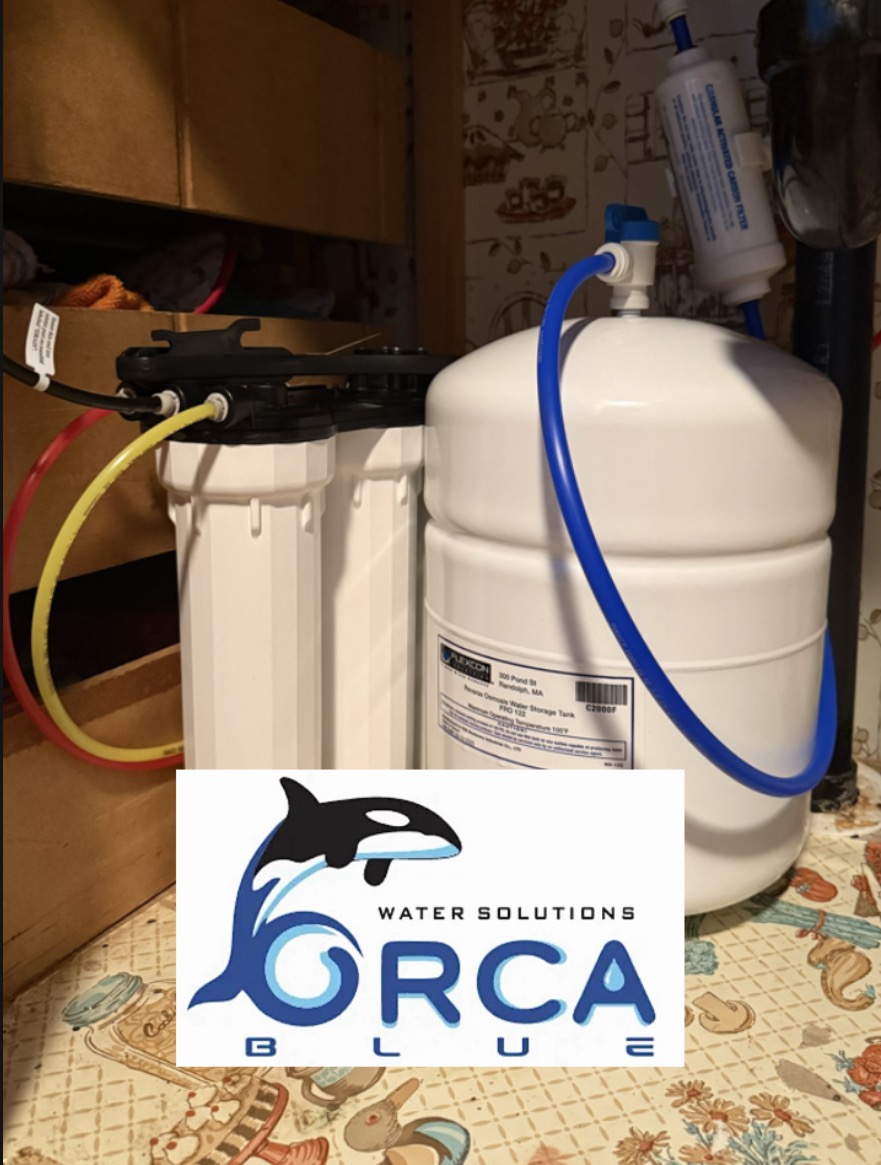
Reverse osmosis is a point-of-use treatment process, typically installed at the kitchen sink, that pushes water through a semipermeable membrane. Depending on the unit and the water being treated, RO can reduce many dissolved substances. The CDC notes that RO systems can remove parasites, bacteria, viruses, and certain chemicals, including lead, copper, chromium, chloride, and sodium; they may also reduce substances such as arsenic, fluoride, nitrate, radium, sulfate, calcium, and magnesium.
That makes reverse osmosis a practical choice for many Raleigh, Wake Forest, Durham, Fayetteville, and Wilmington
homeowners who want cleaner water for drinking, coffee, ice, cooking, and washing produce. At Orca Blue Water, we start with a free water quality test because the right solution should be based on what is actually in your water not a one-size-fits-all sales pitch.
Does RO Water Remove Healthy Minerals?
Yes, RO can reduce minerals such as calcium and magnesium along with the contaminants homeowners may be trying to address. This is where the phrase “dead water” often comes from, but it is more marketing language than a useful health description. Clean, low-mineral water is still water, and it still hydrates you.
For most people, food is the primary source of essential minerals. Calcium commonly comes from foods such as dairy products, fortified foods, certain vegetables, and canned fish with bones. Magnesium is found in legumes, nuts, seeds, whole grains, leafy greens, and other foods. Water can contribute minerals, but it should not be viewed as the only source of nutrition.
That said, some homeowners simply prefer the taste and feel of water with a little mineral content. A true remineralization stage can be a good option when it is designed to add minerals after the RO membrane. It may improve taste and raise the mineral content of the finished drinking water.
If you want minerals added after reverse osmosis, ask for a dedicated remineralization cartridge or mineral-media stage. Orca Blue Water can help homeowners select a system configuration that balances contaminant reduction, taste, and their water-quality goals. The important thing is to make sure the product’s claims match what the equipment is actually built to do.
The Practical Downsides of Reverse Osmosis
RO is highly effective, but it is not automatically the best treatment for every water concern. Here are the practical tradeoffs to consider:
- Water use: Traditional RO systems send some water to drain while producing treated water. Higher-efficiency systems can reduce that waste, but the ratio varies by model, water pressure, and maintenance.
- Filter changes: Prefilters, postfilters, and membranes require service on schedule. Neglecting maintenance can affect taste, flow, and performance.
- Upfront and ongoing cost: A quality system is an investment, and replacement filters are part of owning it.
- Targeted treatment: No system removes every possible contaminant. A unit should be selected for the contaminants and conditions present in your home’s water.
- Flow and storage: Some systems produce water more slowly than a standard faucet, though tankless and high-output models may improve convenience.
Why Testing Comes Before Treatment
City water and well water can have very different challenges. A homeowner with hard water may need a water softener to protect fixtures and appliances. A household using well water may need treatment for sediment, iron, sulfur odor, bacteria, or other concerns. An RO system is usually focused on the drinking-water tap, while a whole-home filtration system treats water used throughout the house.
For that reason, Orca Blue Water recommends testing first and designing the solution around the results. A free water test helps identify whether reverse osmosis, whole-home filtration, a water softener, or a combination of systems makes the most sense for your household.
How to Choose an RO System With Confidence
Look beyond broad claims such as “purified water” or “removes everything.” Ask which contaminants the system is certified or tested to reduce, how often filters need replacement, how much water the system uses, and whether a remineralization stage is included. NSF/ANSI 58 is the voluntary standard commonly associated with reverse-osmosis drinking-water systems; certification and performance claims should be specific to the model you are considering.
Local support matters, too. Orca Blue Water provides homeowner education, professional water filtration installation, and ongoing guidance for families throughout the Triangle area and beyond. We want you to understand what your system does, why it was recommended, and how to keep it performing well.
FAQ
Is reverse osmosis water safe to drink every day?
For most households, properly treated RO water is suitable for daily drinking and cooking. The system should be selected for your water conditions and maintained according to the manufacturer’s schedule.
Will reverse osmosis water cause a mineral deficiency?
RO water contains fewer dissolved minerals, but most people get essential minerals primarily through food. Anyone with specific nutritional or medical concerns should discuss them with a qualified healthcare professional.
Do I need reverse osmosis if I already have a whole-home filter?
It depends on your goals. Whole-home filtration helps address water used throughout the house, while RO is commonly used for an extra level of treatment at a dedicated drinking-water faucet. A water test can help determine whether both make sense.
How do I know which contaminants an RO system will reduce?
Review the manufacturer’s model-specific performance data and certifications, then compare them with your water-test results. Orca Blue Water can walk you through the options and help you choose a system that fits your home and budget.
Want clear answers about your home’s water? Schedule a free water quality test with Orca Blue Water and get recommendations built around your actual water—not fear-based claims.