
Quick Summary:
For most homes served by Raleigh Water, tap water is treated, tested, and required to meet state and federal drinking-water standards. That is reassuring but “safe” and “ideal for your home, appliances, taste preferences, or specific household needs” are not always the same thing. The best answer depends on whether you receive city water or use a private well, the condition of your plumbing, and the specific water-quality concerns you want to address.
For Raleigh homeowners, the practical approach is simple: review the local water report, pay attention to changes at your tap, and test your home’s water when you have questions. Orca Blue Water helps families throughout Raleigh,
Wake Forest, Durham, and the Triangle area
understand what is actually in their water before recommending a solution.
What Raleigh Water Reports About Its Drinking Water
Raleigh Water publishes annual Consumer Confidence Reports and monthly water-quality summaries so customers can see how the public supply is monitored. The utility serves a large regional system and performs ongoing testing as part of its compliance with drinking-water regulations. You can review the latest Raleigh Water reports
directly online.
In other words, if your home is connected to the city system, the water arriving in the distribution system is not untreated water. It has gone through a treatment process designed to control microorganisms and other regulated contaminants. Raleigh Water also reports that it uses corrosion-control practices to help limit the chance of lead entering water from older plumbing components after the water leaves the utility’s system.
Still, a citywide report is a snapshot of the source water and distribution system not a complete diagnosis of every individual kitchen faucet. Your home’s pipes, fixtures, water heater, refrigerator line, and usage patterns can all affect what you notice at the tap.
Why “Within Standards” May Not Answer Every Homeowner Question
Public-water standards are essential protections, but they are not the same as a personal water-preference scorecard. A homeowner may want to reduce a chlorine-like taste or odor, improve drinking-water taste, limit certain contaminants with a certified filter, or protect fixtures from mineral buildup. Those are valid reasons to investigate filtration even when the municipal water supply is meeting regulatory requirements.
Raleigh Water notes that it typically makes a temporary disinfectant change from chloramine to chlorine around late February through early April. During that period, some residents may notice a stronger chlorine taste or smell. The utility says the water remains safe to drink, but sensory changes can understandably lead homeowners to ask more questions.
There is also an important distinction between a whole-home concern and a drinking-water concern. A whole-home filtration system can be designed to address water used for bathing, laundry, fixtures, and appliances. A reverse osmosis system is commonly used at a dedicated drinking-water tap when a household wants more targeted filtration for the water it drinks and cooks with.
What About PFAS and Lead?
PFAS and lead are two topics that frequently come up in conversations about tap water. Raleigh Water has monitored PFAS for years and posts updated results and information about its response on its PFAS information page. The right takeaway is not to panic it is to look at the current local information and make decisions based on your household’s needs.
Lead is different because it often comes from plumbing materials rather than the treated water leaving the plant. Older private plumbing, service lines, fixtures, and lead solder can be relevant in some homes. Raleigh Water states that its most recent 2025 sampling met or exceeded applicable safety standards, while continuing work to identify service-line materials. If you have an older home, have recently completed plumbing work, or see unexplained changes in your water, a home-specific evaluation is especially worthwhile.
If you choose a filter for a specific concern, look for independent certification for that claim. The EPA advises consumers to verify certifications, including NSF/ANSI 53 or NSF/ANSI 58 for filters marketed for PFAS reduction, and to maintain filters on schedule. A filter only works as intended when it is selected for the right purpose and its cartridges are replaced when required.
City Water vs. Well Water in the Triangle
Not every Raleigh-area homeowner receives the exact same water. Homes on city water should begin by reviewing Raleigh Water’s reports and then consider a water quality test that reflects conditions inside the home. Homes on private wells need a different approach because well water is not treated by the municipal system before it reaches the house.
For well water systems, testing is the starting point not an optional extra. Depending on the property, a test may identify hardness, iron, manganese, sulfur odors, bacteria concerns, pH issues, or other conditions that call for a specific treatment strategy. A system that works beautifully for one home may not be appropriate for another.
That is why Orca Blue Water starts with a free water test. Rather than leading with a one-size-fits-all product, our local water experts help homeowners understand their water first and then discuss practical options, including whole-home filtration, water softeners, and reverse osmosis.
Do You Need a Water Softener in Raleigh?
Raleigh’s public water is generally considered relatively soft based on the utility’s published average hardness data. That means many city-water households may not need a traditional water softener for the same reasons homeowners in very hard-water areas do. However, household experiences can vary, and nearby properties on wells can have entirely different mineral levels.
If you are dealing with spots on glassware, dry-feeling skin, scale on fixtures, shortened appliance life, or a water heater that seems to accumulate sediment, testing helps separate assumption from evidence. Sometimes the answer is a softener; sometimes it is filtration, maintenance, a point-of-use system, or no equipment at all.
Signs It Is Time to Test Your Water
Consider scheduling a water quality test if you notice:
- A sudden chlorine, metallic, sulfur-like, or musty odor
- Changes in taste, cloudiness, or color
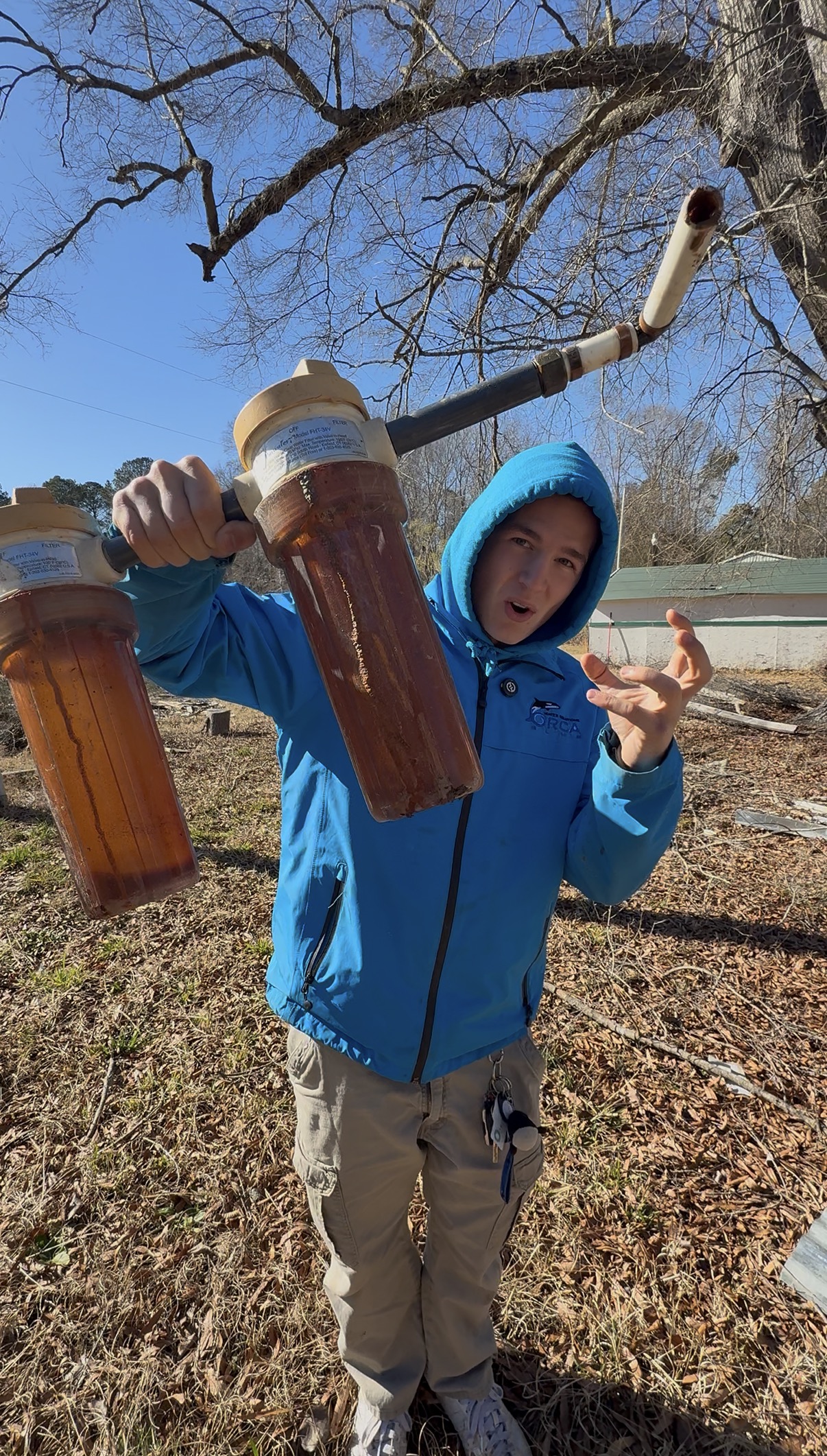
- Orange, blue-green, or black staining around fixtures
- Scale buildup on faucets, shower doors, or appliances
- Frequent plumbing or water-heater issues
- An older home with unknown plumbing materials
- A private well, especially after flooding, repairs, or a change in taste or odor
Testing does not mean there is automatically a safety problem. It means you are making a decision based on your home’s water rather than guesswork.
FAQ
Is Raleigh tap water safe to drink every day?
For most homes served by Raleigh Water, the public supply is treated and monitored to meet drinking-water requirements. For the most current information, check Raleigh Water’s latest annual and monthly reports. Individual home plumbing and private wells can create additional considerations.
Why does my Raleigh tap water sometimes smell like chlorine?
A chlorine-like smell can be more noticeable during Raleigh Water’s temporary annual switch from chloramine to chlorine disinfection. The utility says this change can affect taste and odor while the water remains safe. If the smell is persistent or unusual, a water test can help identify whether the issue is related to household plumbing or another cause.
Should I install a whole-home filter or reverse osmosis system?
It depends on your goal. Whole-home filtration
is suited to water used throughout the house, while reverse osmosis
is usually installed for highly filtered drinking and cooking water at a specific tap. A professional water quality test helps match the solution to the problem.
Can a water filter remove everything from tap water?
No. Filters have different capabilities, and performance depends on the technology, certification, installation, and maintenance. Choose a system based on the contaminants or water characteristics you want to address not broad marketing claims.
How can I find out what is in my home’s water?
Start with your local utility’s published report if you have city water, then schedule a home-specific water quality test. Orca Blue Water offers free water tests for Raleigh-area homeowners who want clear answers and straightforward recommendations, with affordable financing options available for qualifying installations.