
Quick Summary:
Yes - properly filtered reverse osmosis (RO) water
is generally safe for healthy Raleigh-area homeowners
to drink every day. An RO system can be an excellent choice for drinking and cooking water when it is correctly installed, maintained on schedule, and selected for the contaminants you want to reduce. Raleigh’s municipal water is treated and monitored to meet drinking-water requirements, but many homeowners choose RO for an extra layer of filtration, better taste, and greater confidence in the water at their kitchen sink.
What Reverse Osmosis Water Is—and Why People Choose It
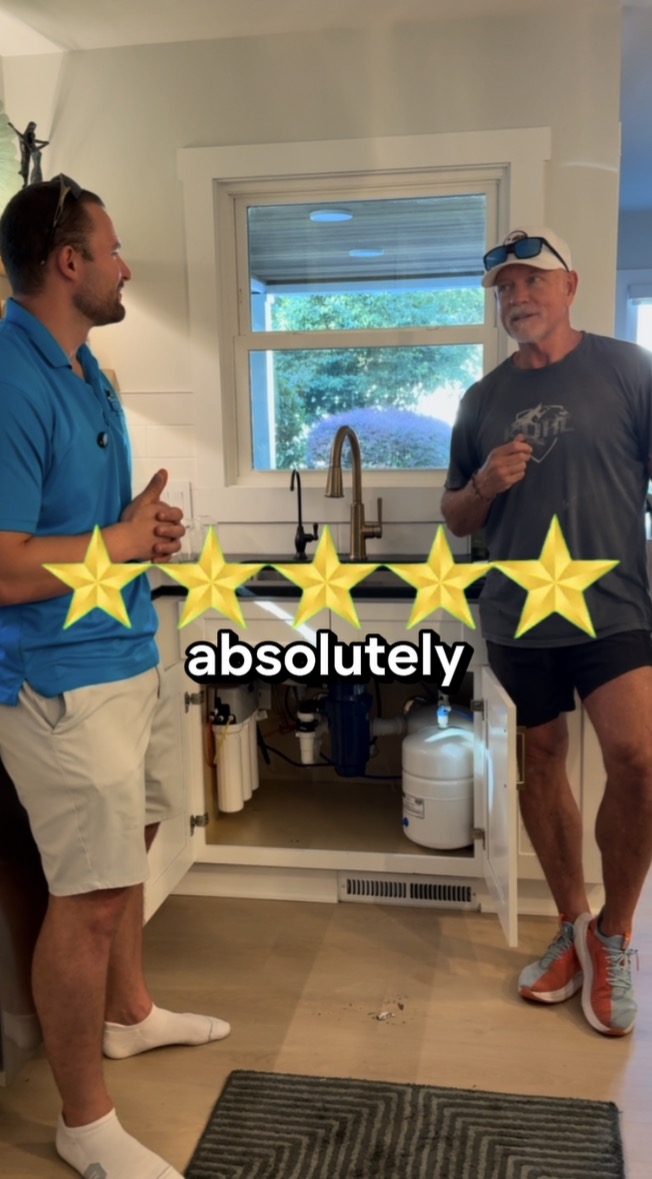
Reverse osmosis is a point-of-use filtration process, most often installed under the kitchen sink. Water is pushed through a specialized membrane that reduces many dissolved materials before the treated water reaches a dedicated drinking-water faucet.
For Raleigh, Wake Forest, Durham, and throughout the Triangle area,
homeowners commonly choose reverse osmosis because they want clean-tasting water for drinking, coffee, ice, baby formula, and cooking. A properly selected RO system can help reduce dissolved solids and can be certified for reduction of specific concerns such as lead, certain volatile organic compounds, arsenic, nitrates, and PFAS depending on the system and its tested claims.
That last point matters: not every filter reduces every contaminant. The right system should be matched to the home’s incoming water and supported by documented performance certification, rather than broad promises on a box.
Is Raleigh Tap Water Safe Before It Goes Through RO?
Raleigh Water publishes regular water-quality information and is required to monitor its public drinking-water system under state and federal rules. For homeowners served by Raleigh’s municipal supply, that means tap water is treated and monitored before it reaches the home.
Choosing reverse osmosis does not mean city water is automatically unsafe. It is often a preference for additional treatment at the point where a family drinks and cooks. Some households are sensitive to taste or odor, want to reduce certain dissolved substances, or simply want more control over the water coming from one faucet.
Homes on private wells are different. Well water quality can vary substantially from one neighborhood or even one property to the next.
In those situations, a water quality test
is especially important before recommending any treatment equipment. The best solution might include RO for drinking water, a water softener, whole-home filtration, or a combination designed around the actual test results.
Can Drinking RO Water Every Day Cause Mineral Deficiencies?
This is one of the most common questions about RO water. Because reverse osmosis reduces dissolved solids, it can also reduce minerals such as calcium and magnesium in the water. But for most healthy people, drinking water is not the primary source of essential minerals. A balanced diet is where most people obtain calcium, magnesium, potassium, and other nutrients.
In other words, the fact that RO water has fewer dissolved minerals does not make it unsafe to drink daily. Families who prefer the taste or peace of mind of RO water can typically use it as their everyday drinking water while continuing to get nutrients through regular meals.
Some homeowners also prefer a system with a remineralization stage, often using a mineral or coconut-shell carbon filter after the RO membrane. This can improve taste and add small amounts of minerals back into the drinking water. It is an option based on personal preference not a requirement for RO water to be suitable for daily use.
What Makes an RO System Safe and Effective?
The safety and performance of an RO system depend on more than the membrane. A quality installation starts with understanding the home’s water. Incoming hardness, water pressure, plumbing conditions, installation location, and the household’s goals all affect the best setup.
Look for a system that is independently certified to NSF/ANSI Standard 58 for reverse osmosis performance. If you are concerned about a particular contaminant, verify that the exact model is certified for reduction of that contaminant. The system should also be installed according to manufacturer instructions and local plumbing requirements.
Maintenance is equally important. Pre-filters, carbon filters, and the RO membrane need to be replaced at the recommended intervals. Waiting too long can reduce flow, affect taste, and limit filtration performance. A professional water treatment company can explain the maintenance schedule clearly and make sure the equipment continues to operate as intended.
RO Is for Drinking Water Whole-Home Treatment Solves Different Problems
Reverse osmosis is designed for the water you drink and cook with. It is not usually the first solution for hard-water scale on fixtures, spots on glassware, dry-feeling skin, or appliance buildup throughout the home. Those concerns are often better addressed with a water softener or whole-home filtration system.
That is why Orca Blue Water begins with homeowner education and a free water quality test.
A test helps identify what is actually in the water and prevents a one-size-fits-all recommendation. For example, a Raleigh homeowner may benefit from RO at the kitchen sink for drinking water, while a home with elevated hardness or well-water issues may benefit from a customized whole-home approach as well.
How Raleigh Homeowners Can Get the Most From RO Water
For the best experience, use your RO system consistently for drinking and cooking, follow the filter-change schedule, and have the system checked if you notice a major change in taste, odor, or water flow. Keep the dedicated faucet clean and use the system only for the purpose it was designed for.
It is also wise to begin with the right questions: Are you on city water or a private well? Are you mainly concerned about taste, scale, lead, PFAS, or another issue? Does your home have hard water that could affect equipment over time? A professional test and consultation can turn those questions into a practical plan.
Orca Blue Water helps Raleigh-area homeowners understand their water before they buy a system. Whether the answer is reverse osmosis, whole-home filtration, a water softener, or a combination, the goal is simple: cleaner water and a solution that fits the home.
FAQ
Is it okay to drink reverse osmosis water all day?
For most healthy people, yes. Properly filtered and properly maintained RO water is generally appropriate for everyday drinking and cooking.
Does RO water remove healthy minerals?
RO can reduce dissolved minerals along with other dissolved substances. Most people obtain essential minerals primarily from food, and a remineralization stage is available for homeowners who prefer it.
Does reverse osmosis remove PFAS?
Some RO systems are certified to reduce certain PFAS. Check the performance documentation for the specific model rather than assuming every RO system has the same reduction claims.
Do Raleigh homeowners need reverse osmosis?
Not everyone needs it. Raleigh’s public water is treated and monitored, but RO can be a valuable optional upgrade for families seeking extra filtration, improved taste, or contaminant-specific reduction at the drinking-water faucet.
How often should RO filters be changed?
It depends on the equipment, incoming water quality, and household use. Follow the manufacturer’s schedule and have the system professionally serviced when needed.
Want to know what is in your home’s water? Contact Orca Blue Water for a free water quality test in Raleigh, Wake Forest, Durham, and the surrounding Triangle area.